Your First Draft Should Embarrass You: The Case for Learning Out Loud
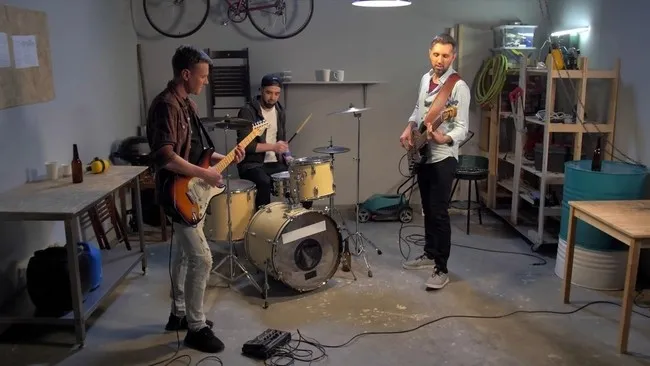
Photo: amateur garage band practicing instruments in garage, via skopemag.com
There's a guy in every American suburb who has been 'about to start' a podcast for three years. He's bought the mic. He's watched the tutorials. He has a document titled 'Episode Ideas — FINAL.' What he doesn't have is a single published episode.
Meanwhile, his neighbor — the one with the mediocre garage band — has played eleven sloppy shows at the local brewery. She's forgotten chords in front of strangers, flubbed banter between songs, and gotten slightly better every single time. Guess which one is actually learning?
The Preparation Trap
Here's an uncomfortable pattern we see constantly at Mukizo: learners binge content for months, then freeze at the moment of actual practice. They finish the course, buy the book, bookmark the tutorials — and never ship the thing.
Psychologists have a name for part of this: the 'preparation plateau.' Consumption feels like progress because it's comfortable. Nobody watches you read a chapter. Nobody hears your first take. Preparation is a performance of learning that lets you skip the embarrassing part.
But the embarrassing part is where the learning actually lives.
Why Messy Beats Polished
Think about how garage bands improve. They don't rehearse for two years before playing a single note in public. They book a gig at the VFW hall way too early, play to twelve people and a dog, and bomb spectacularly. Then they adjust.
That bomb is the product. Real-time feedback — an unimpressed crowd, a rhythm section that couldn't hear you, a setlist that dragged — compresses years of theory into one rough evening. Hobbyist coders figured this out too. The ones who improve fastest aren't the ones with the prettiest GitHub repos. They're the ones who push an ugly little app, get roasted in the comments, and fix it by Friday.
The mechanism is simple: mistakes made in public come with consequences attached, and consequences are memory glue. A video you watched fades. The time you blanked on stage at an open mic in Columbus? That's burned in forever — along with exactly what you'd do differently.
The 'Bad on Purpose' Framework
So how do you engineer productive embarrassment into your own learning? Try this four-step loop:
1. Shrink the stage. You don't need a stadium. You need a small, real audience. Post the code snippet. Send the draft to one friend. Play the new song for your partner before you've earned it.
2. Set a cringe budget. Decide in advance how much discomfort you'll tolerate per week — one public post, one live attempt, one submitted-not-perfected project. Treat it like a gym schedule. The goal is reps, not quality.
3. Debrief in five minutes. Right after the attempt, write down three things: what worked, what flopped, and the one change you'd make next time. No essays. The immediacy is what locks in the lesson.
4. Repeat before you feel ready. This is the whole trick. If you wait until you feel ready, you've waited too long. The schedule is the boss, not your confidence.
Sounding Bad Is a Strategy, Not a Failure
Somewhere along the way, American work culture decided that visible struggle equals incompetence. It doesn't. It equals somebody still in the game. The person posting their seventh rough draft looks 'worse' than the person silently consuming their ninth course — right up until the moment the drafts start getting good.
Every skill you admire in someone else was built on a pile of their public failures that you just never saw. The polished speaker bombed at Toastmasters. The successful freelancer's first invoices were laughably underpriced. The garage band that eventually packs the room spent years sounding like a highway accident.
So here's your permission slip: pick the skill you've been quietly preparing to learn, and do it badly somewhere visible this week. Your first take should embarrass you a little.
That's not a sign you're failing. That's the sound of the learning curve bending in your favor.