Your AI Study Partner Sounds Certain. That's the Problem.
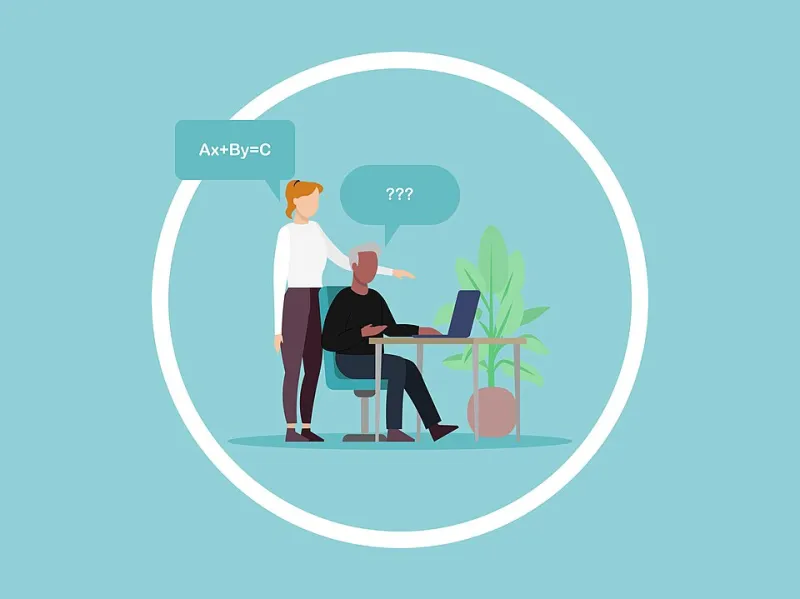
Photo: Preply.com Images, CC BY 2.0, via Wikimedia Commons
AI study tools are genuinely good at some things. They can explain a concept five different ways at 2 a.m. They can generate a quiz from your notes, role-play a job interview, or mark up your essay with more patience than any human friend. They can also tell you, with perfect confidence, that a fake study was published in a journal that does not exist.
That is the deal in 2026. The question is not whether to use AI as a study partner. Most learners already do. The question is how to use it without outsourcing the part of learning that actually changes your brain.
Where AI earns its keep
AI is strongest when it is doing something active and narrow. Ask it to quiz you on chapter four. Ask it to give you five wrong answers and make you explain why they are wrong. Ask it to restate a concept for a beginner, then for a skeptic, then for someone who has to teach it on Monday. That is retrieval practice with a tireless partner.
It is also useful for feedback. A writing coach can point out that your paragraph buries the point, or that your argument jumps from claim to conclusion. A language partner can correct your grammar without laughing. A coding assistant can explain an error message in plain English. These are real accelerations, especially for adults learning around jobs and family.
Where it quietly steals the learning
The trouble starts when AI becomes an answer machine. You paste in a question, read a clean explanation, nod, and move on. That feeling of fluency is not the same as knowing. Learning science has a name for the gap: the illusion of fluency. The text makes sense while you are reading it, so your brain files it under 'learned.' Then you try to retrieve it a week later and find an empty shelf.
There are three other traps. First, hallucination: AI can invent facts, citations, dates, and API details in prose that sounds more confident than a textbook. Second, sycophancy: it tends to agree with you, which is terrible for checking a wrong answer. Third, over-polishing: if it rewrites your work, you may submit a better product while building a weaker skill.
The rules that keep the struggle
The goal is productive struggle, not friction for its own sake. These rules keep the thinking on your side of the table:
- Ask for questions before answers. Start with, 'Quiz me on this topic and do not show the answers until I respond.' You will learn more from five hard questions than from five tidy summaries.
- Make it cite, then verify. For factual claims, ask for sources. Then open the source yourself. If it cannot produce a real one, treat the claim as unconfirmed.
- Explain it back without help. Close the chat. Write or say the explanation from memory. Then reopen the chat and compare. The gap is your study list.
- Keep a closed-book block. Twenty minutes of no-AI recall is worth more than an hour of reading chat output. Use AI after the struggle, not instead of it.
- Ask it to disagree. Prompt it to argue against your position, find the weakest part of your plan, or list what you are missing. This counters the agreement reflex.
- Log its errors. Keep a running note of every time it got a fact wrong. That note is a reality check and a study aid.
- Never let it write the first draft. Use it to brainstorm, critique, or edit. The first draft is where you find out what you actually think.
- Escalate high-stakes topics to humans. Medical, legal, safety, and financial questions need a qualified person, not a confident chatbot.
A 25-minute session that works
Try this on your next study block. Spend five minutes recalling what you already know without AI. Spend ten minutes with AI generating practice questions and grading your answers. Spend five minutes checking one factual claim against a primary source. Spend five minutes writing a three-sentence summary from memory. That is a complete loop: retrieve, test, verify, consolidate.
The point is not purity
You do not get a gold star for avoiding AI. You get a gold star for learning. AI is a power tool. A table saw makes a carpenter faster, but it does not make the carpenter's judgment. The same goes for your study partner. Let it quiz you, challenge you, and explain the hard part. Do not let it do the knowing for you.
At Mukizo, the bet is simple: the learners who thrive in 2026 will not be the ones with the most tabs open. They will be the ones who know which parts of the work to keep for themselves.